
Image Engineering Group
Don Penn Consulting Engineers

PLUMBING CODE ENFORCEMENT
WITH EXPANSIVE SOIL UNDER SLABS

Don Penn, PE
Presentation to the
North Texas Chapter of the International Code Council
April 8, 2022
OVERVIEW
Examples of Construction Approaches in the DFW Area
Litigation History
Current Codes
Code History
Now Completed 2021 ICC Group A Cycle*
*New language explicitly mandating
how plumbing shall be protected
from expansive soil under slabs.
Recommendations
EXAMPLES OF CONSTRUCTION APPROACHES
IN THE DFW AREA
EXAMPLES OF CONSTRUCTION APPROACHES
Slab-on-Ground Foundations
Buried Plumbing
Slab-on-Crawlspace Foundations
Isolated Plumbing (with Non-Isolated Plumbing at Perimeter)
Slab-on-Voidform Foundations
Non-Isolated Plumbing
Isolated Plumbing
SLAB-ON-GROUND FOUNDATIONS
1.Expansive soil is typically removed or modified to reduce the Potential Vertical Movement (PVM) to 1” or less.
2.The slab and plumbing underneath typically both move together as the soil swells/shrinks.
3.When plumbing becomes damaged by expansive soil movement, the slab can typically be sawcut above the damage and the plumbing can be repaired as feasible maintenance.
SLAB-ON-CRAWLSPACE FOUNDATIONS
1.The crawlspace provides an accessible under-floor space that isolates most of the plumbing from expansive soil damage.
2.At the perimeter, where the plumbing transitions to being buried outside of the building, the plumbing becomes non-isolated and damage can occur, but the crawlspace access makes repairs feasible.
SLAB-ON-VOIDFORM FOUNDATIONS
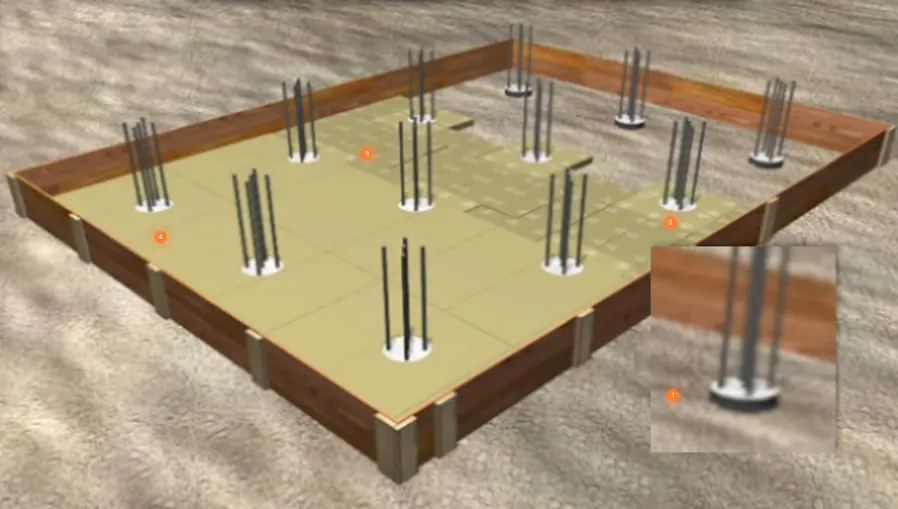
1.The building code only requires under-floor access if an under-floor space is a “crawlspace”. Under-floor voidform spaces without access are not crawlspaces. The voidforms either degrade or collapse over time so as to protect the slab from expansive soil damage. Unless the plumbing is isolated, plumbing has to bridge between a moving system (the soil) and a non-moving system (the slab), so re-occurring damage is common.
2.Any damage to the plumbing under the slab becomes extremely expensive to repair because there is no access and the slabs typically CANNOT be sawcut immediately over the damaged plumbing because it could (and has in some cases) cause a structural collapse of the slab.
3.Small, temporary access openings are typically sawcut in the slab, in between pier lines in both plan directions, and soil is hand excavated (shovel by shovel) and wheelbarrowed out of the building to reach the damaged plumbing. And, after all this time and expense, the repairs do NOT solve the under-lying reason that the damage occurred in the first place, so it re-occurs.
SLAB-ON-VOIDFORM FOUNDATIONS
SLAB-ON-VOIDFORM FOUNDATIONS
Non-Isolated Plumbing
Buried Plumbing
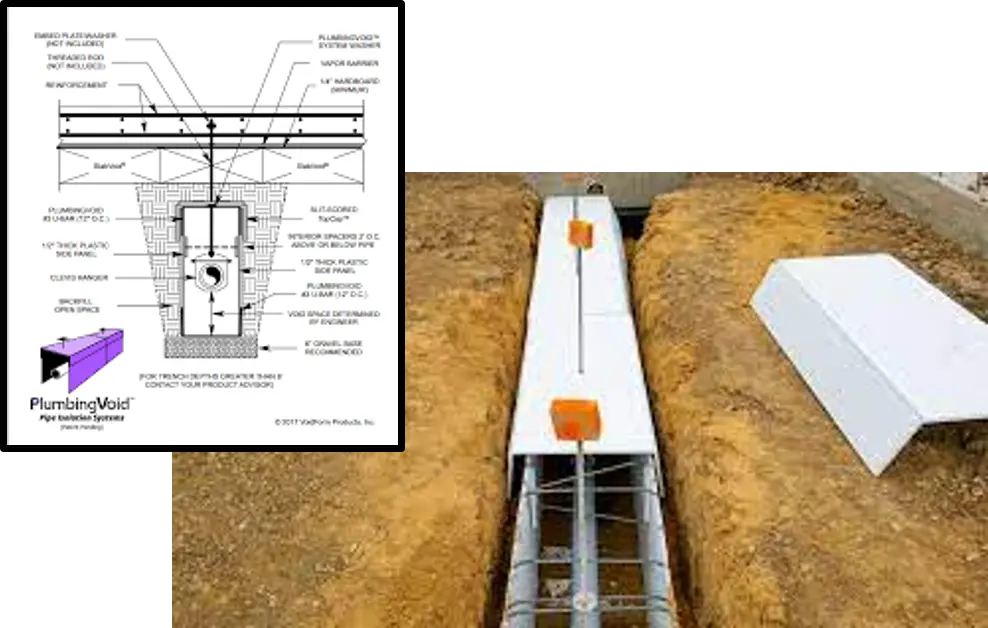
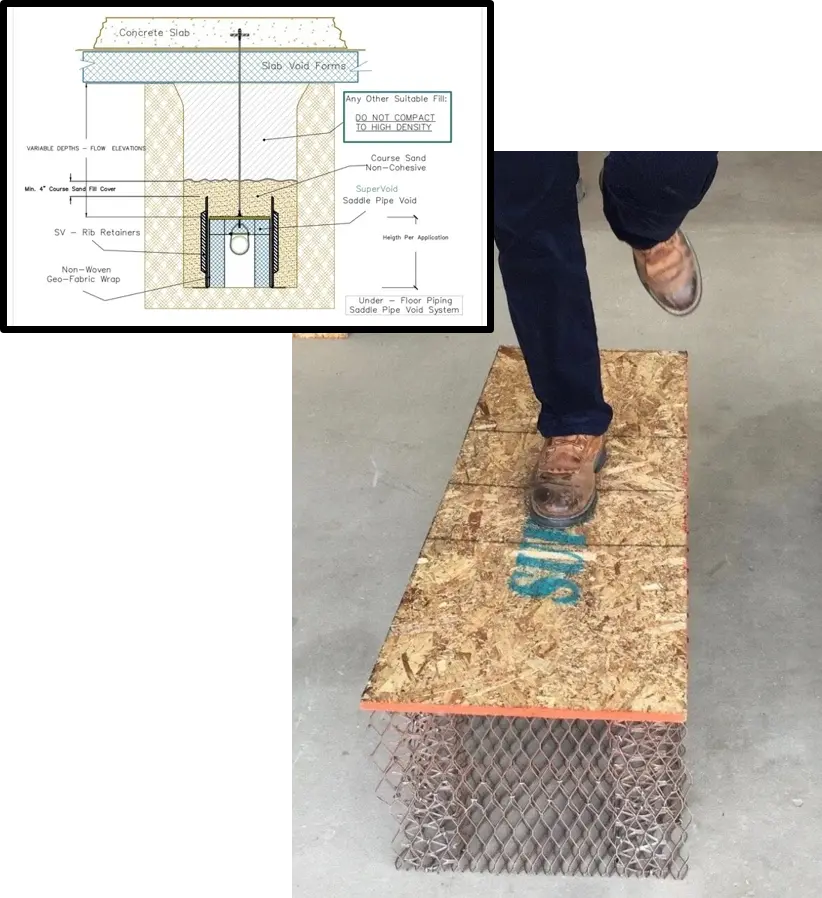
Non-Isolated Void Systems (Many Patented)
Isolated Plumbing
Post-Installed Plumbing
Pre-Installed Plumbing (Newer to the Market and Patent Pending)
NON-ISOLATED
PLUMBING
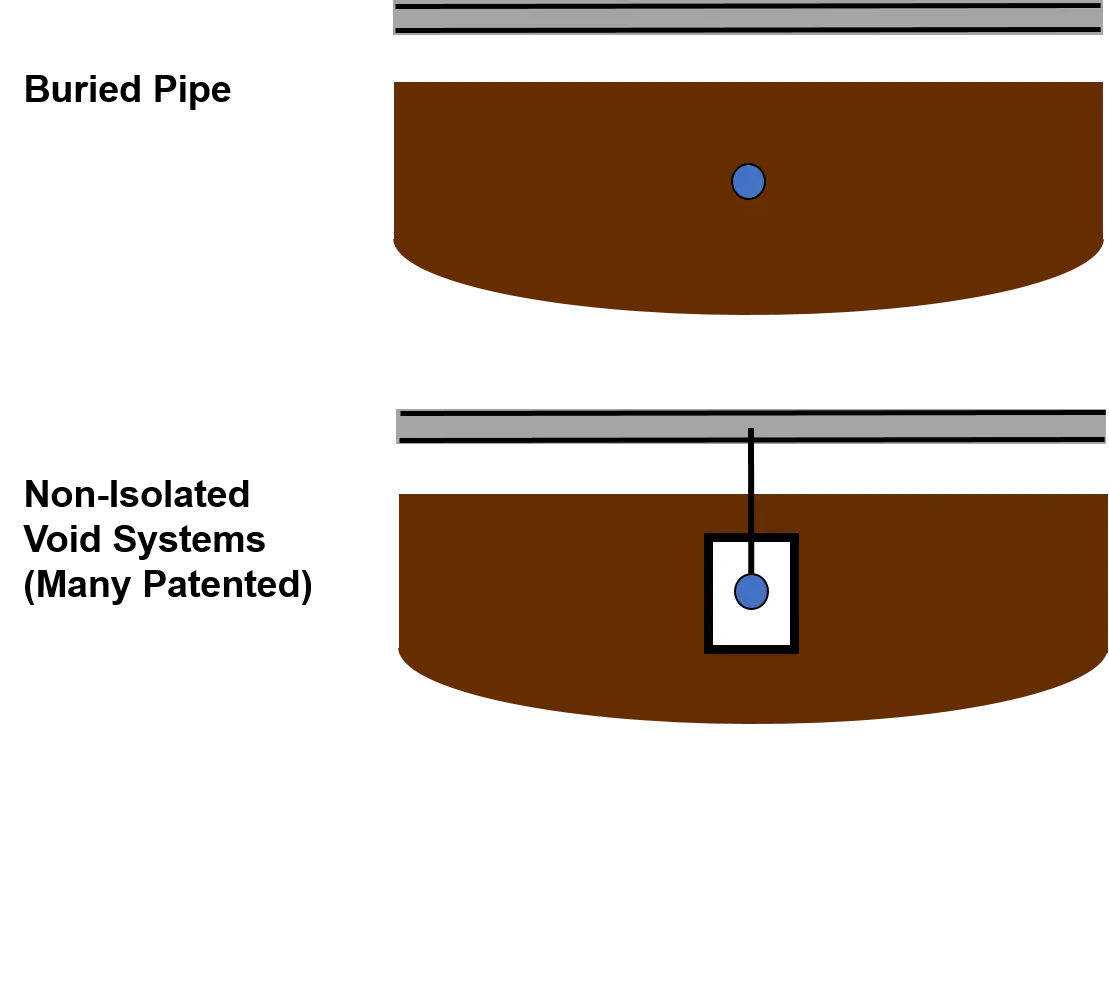
NON-ISOLATED
VOID SYSTEMS
ISOLATED
PLUMBING
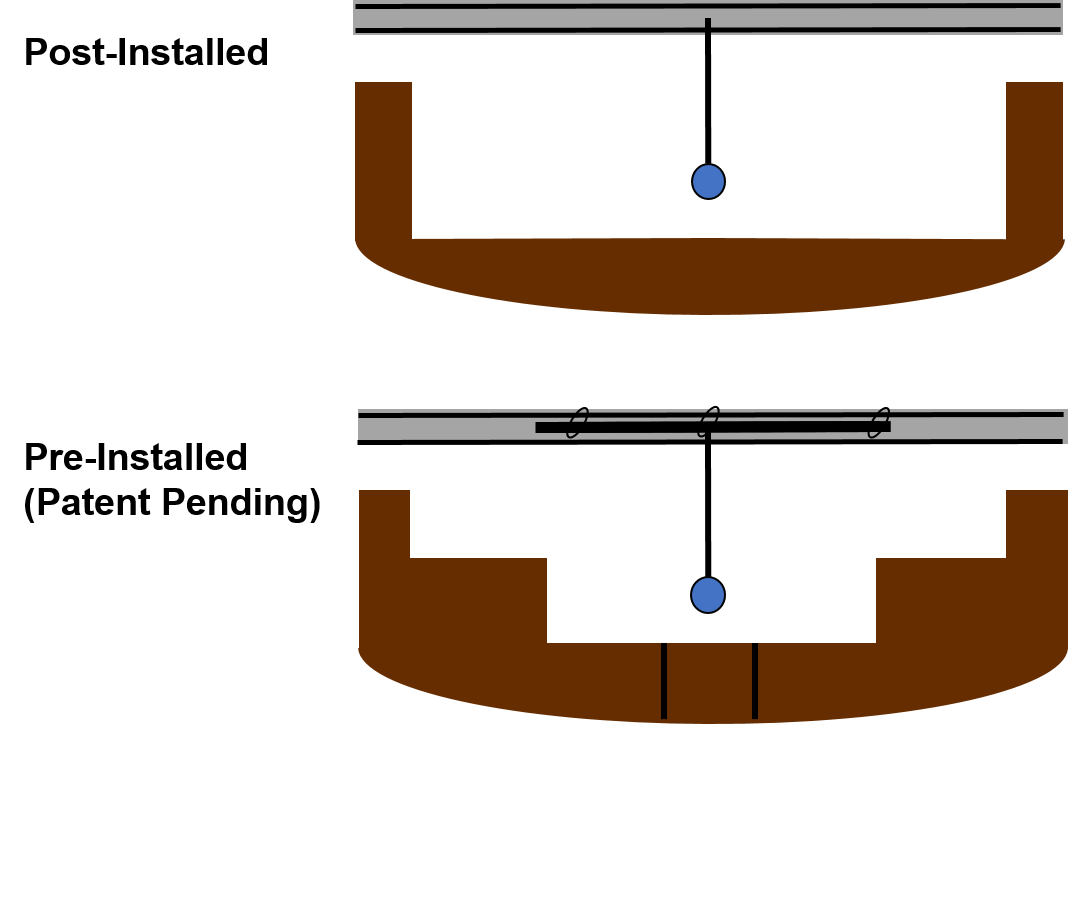
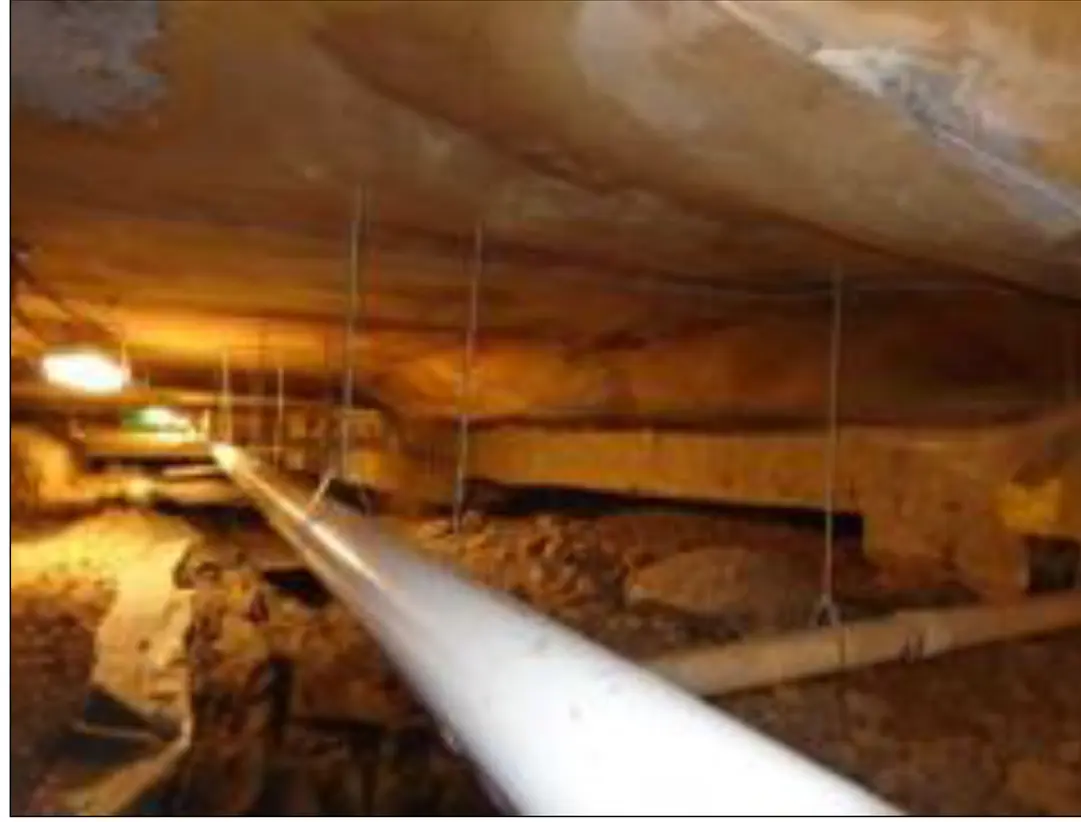
POST-INSTALLED
Photo of an $8 M remediation of an approximately 100,000 sf slab-on-voidform foundation
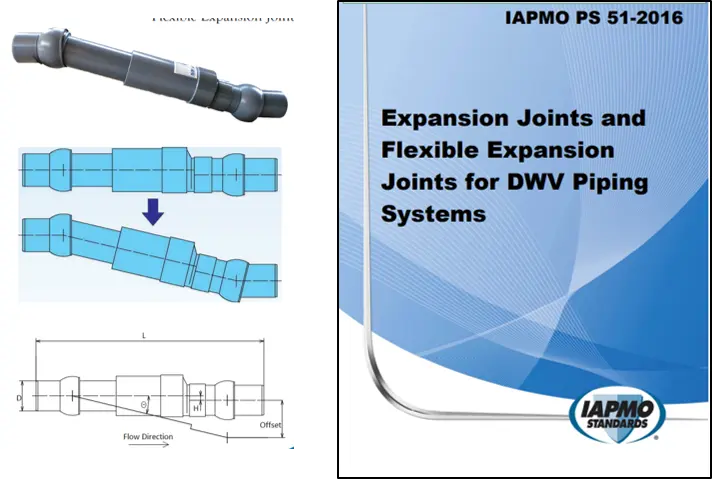
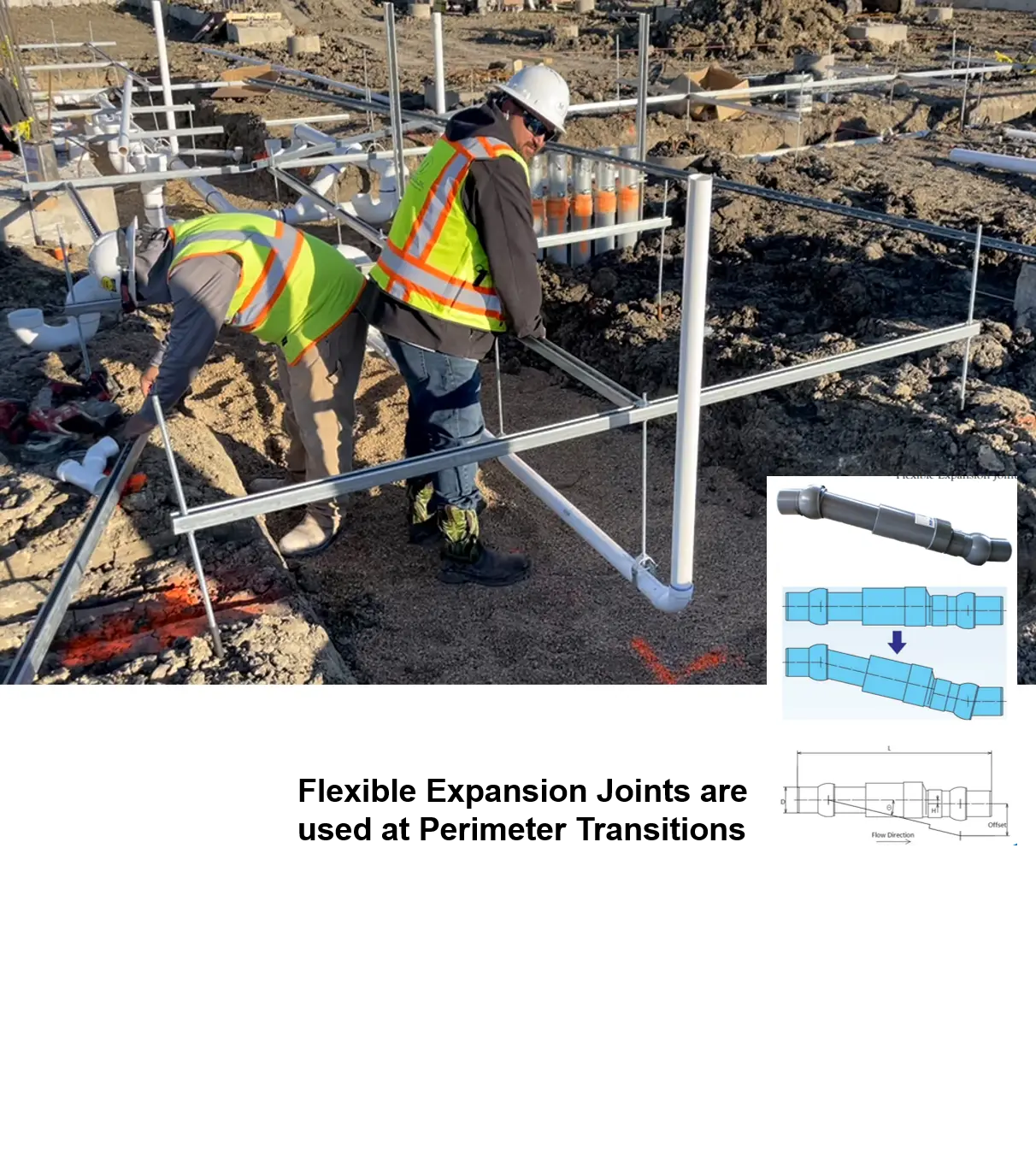
Flexible Expansion Joints can be used at Perimeter Transitions
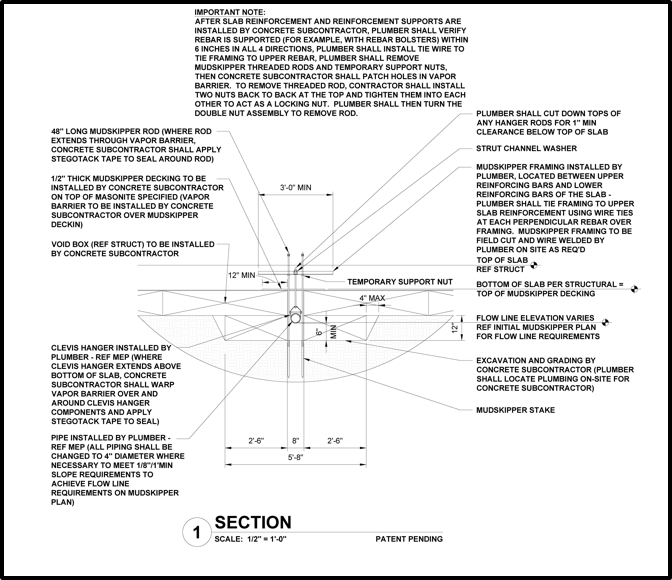
PRE-INSTALLED
Strut channels at a mid-slab elevation are tied to rebar and then temporary supports are removed before pouring the slab
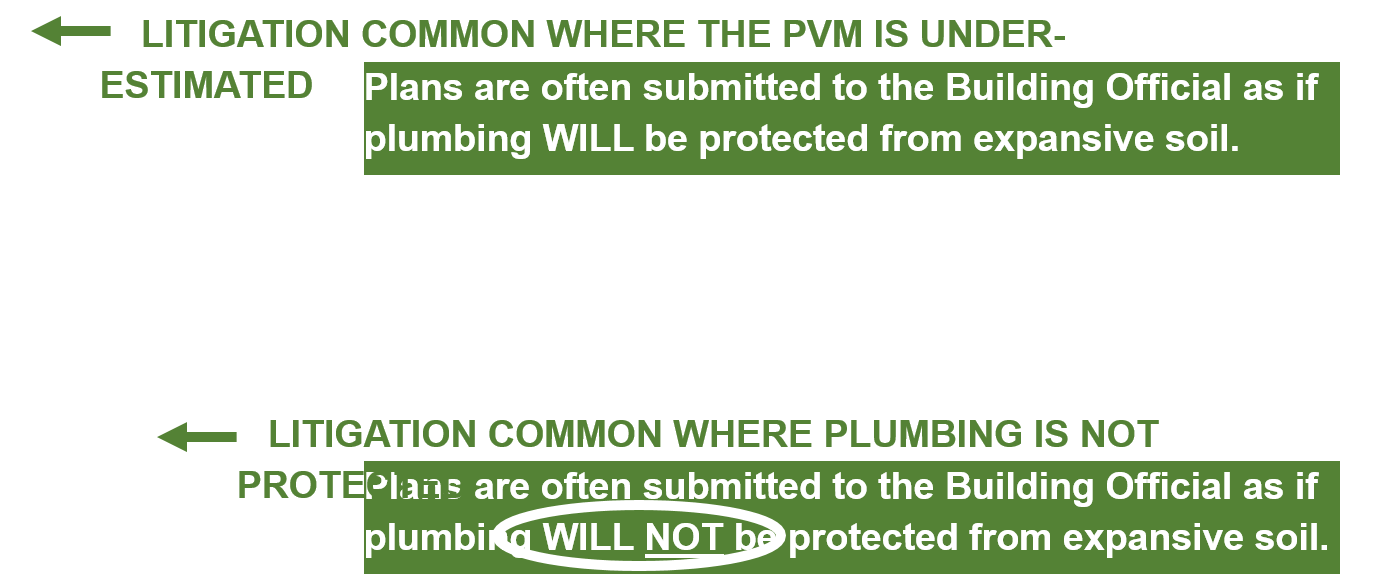
LITIGATION HISTORY
LITIGATION HISTORY
Slab on Ground Foundations
Buried Plumbing
Crawlspace Foundations
Isolated Plumbing
Slab on Void Foundations
Non-Isolated Plumbing
Isolated Plumbing
FEDERAL COURT RULING IN SAN ANTONIO
(SLAB-ON-VOIDFORM WITH NON-ISOLATED PLUMBING)
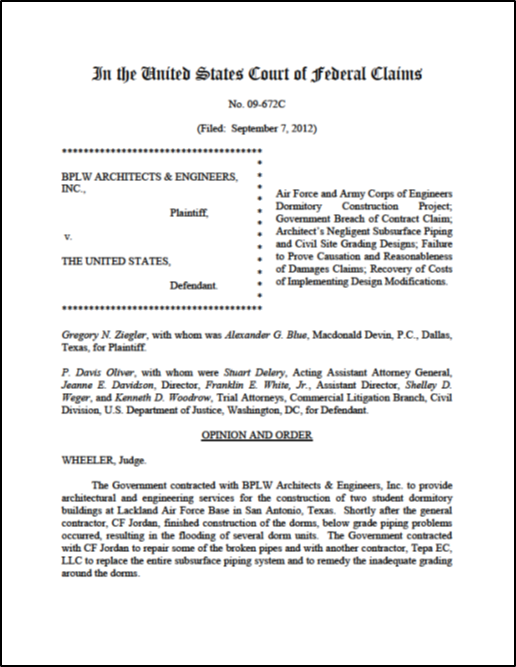
“The Government claims that BPLW provided a negligent underfloor piping design, as the design failed to accommodate the “highly expansive” soils in the San Antonio area. In addition, the Government claims that BPLW provided a negligent civil site grading design, as it did not provide for the requisite five percent slope away from the dorms. The Government contends that these negligent designs caused the piping problems at the dorms and led it to incur substantial expense to repair broken pipes, replace the underfloor piping system, and remedy the site grading.”
“As set forth below, the Court finds that BPLW did indeed provide negligent underfloor piping and civil site grading designs, as both failed to comply with the contract requirements and the applicable standard of care.”
GBA CASE STUDY 108 IN COLORADO
(SLAB-ON-VOIDFORM WITH NON-ISOLATED PLUMBING)
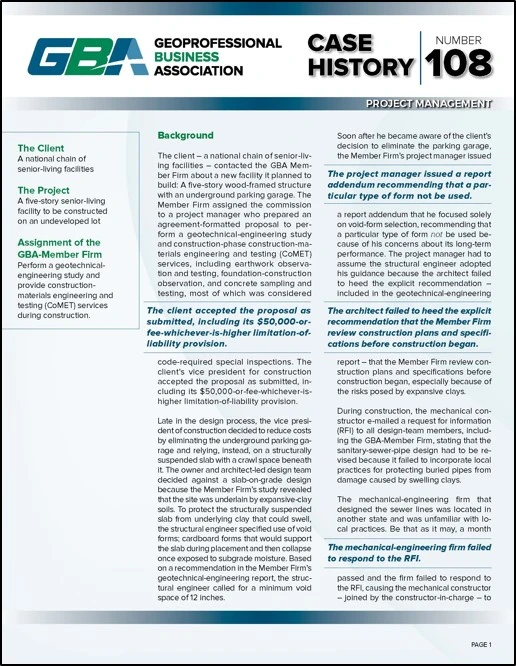
“On the advice of the forensic consultant, the client chose to excavate a deep crawl space under the building floor – essentially a basement – so workers could access the sewer lines and repair them. This labor-intensive effort cost
about $8.3 million*. Not surprisingly, the client filed construction-defect claims against all the design firms
involved, the constructor-in-charge, and the mechanical constructor. The client was seeking $25 million to pay for sewer-line repairs, floor-slab repairs, interior repairs, lost
revenue from residents, resident-relocation costs, attorney’s and expert’s fees, and court Costs.” *All financial factors are reported in 2020 dollars.
EXAMPLES OF LITIGATION IN DFW NEWS
(SLAB-ON-VOIDFORM WITH NON-ISOLATED PLUMBING)
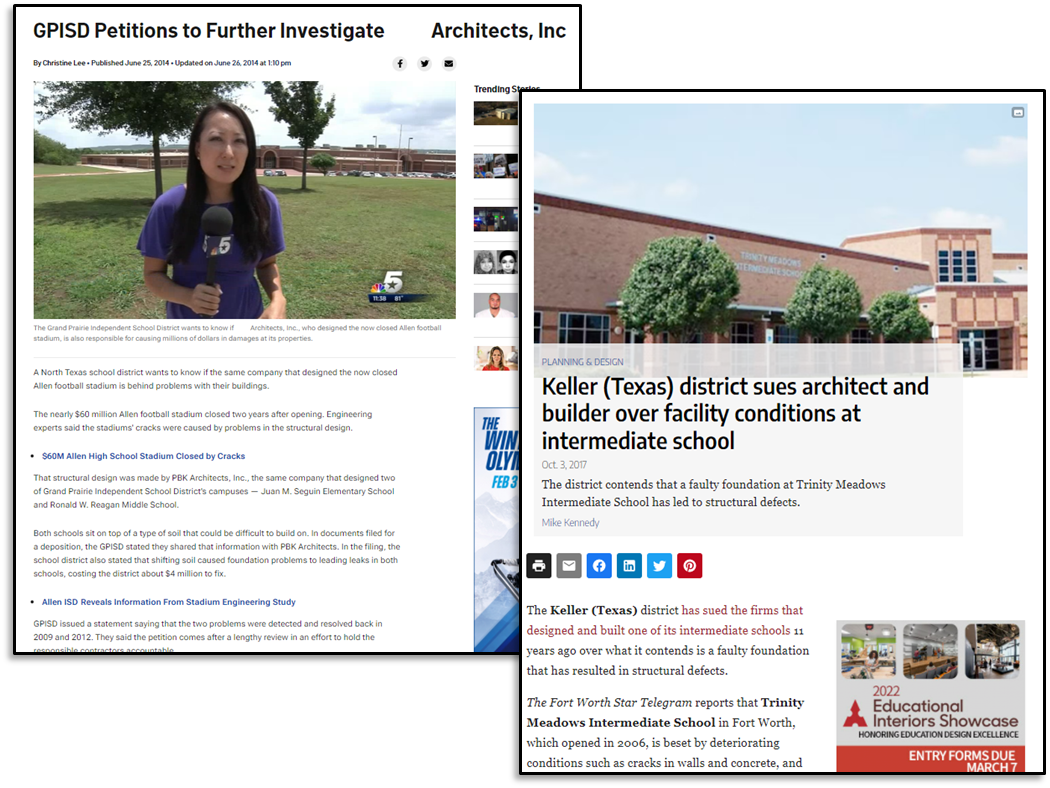
PVC CRACKS FROM ½” SUBGRADE MOVEMENT
(SLAB-ON-VOIDFORM WITH NON-ISOLATED
$1 M remediation cost
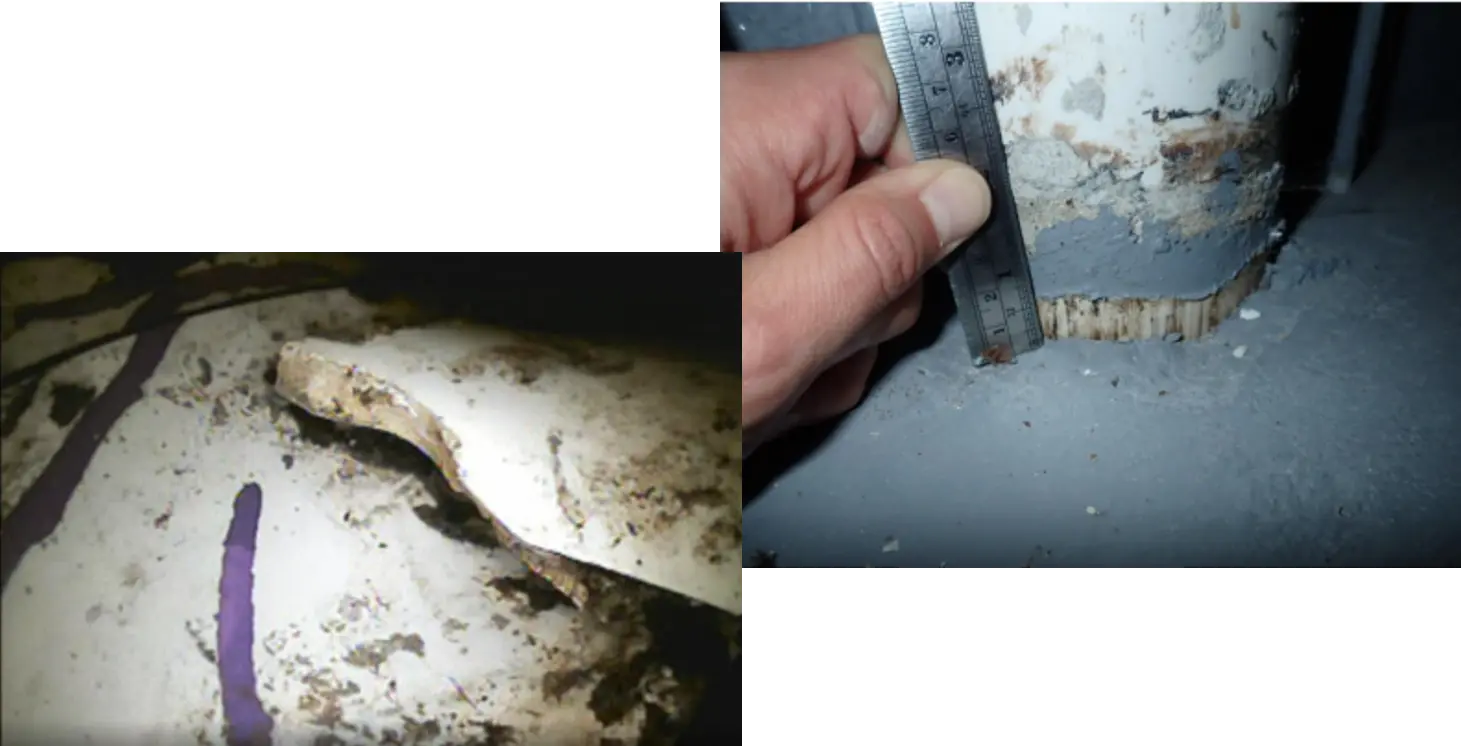
CURRENT
INTERNATIONAL PLUMBING CODES
(All Editions from 2000 to 2021)

SECTION 305
PROTECTION OF PIPES AND
PLUMBING SYSTEM COMPONENTS
Stress and strain. Piping in a plumbing system shall be installed so as to prevent strains and stresses that exceed the structural strength of the pipe. Where necessary, provisions shall be made to protect piping from damage resulting from expansion, contraction and structural settlement.
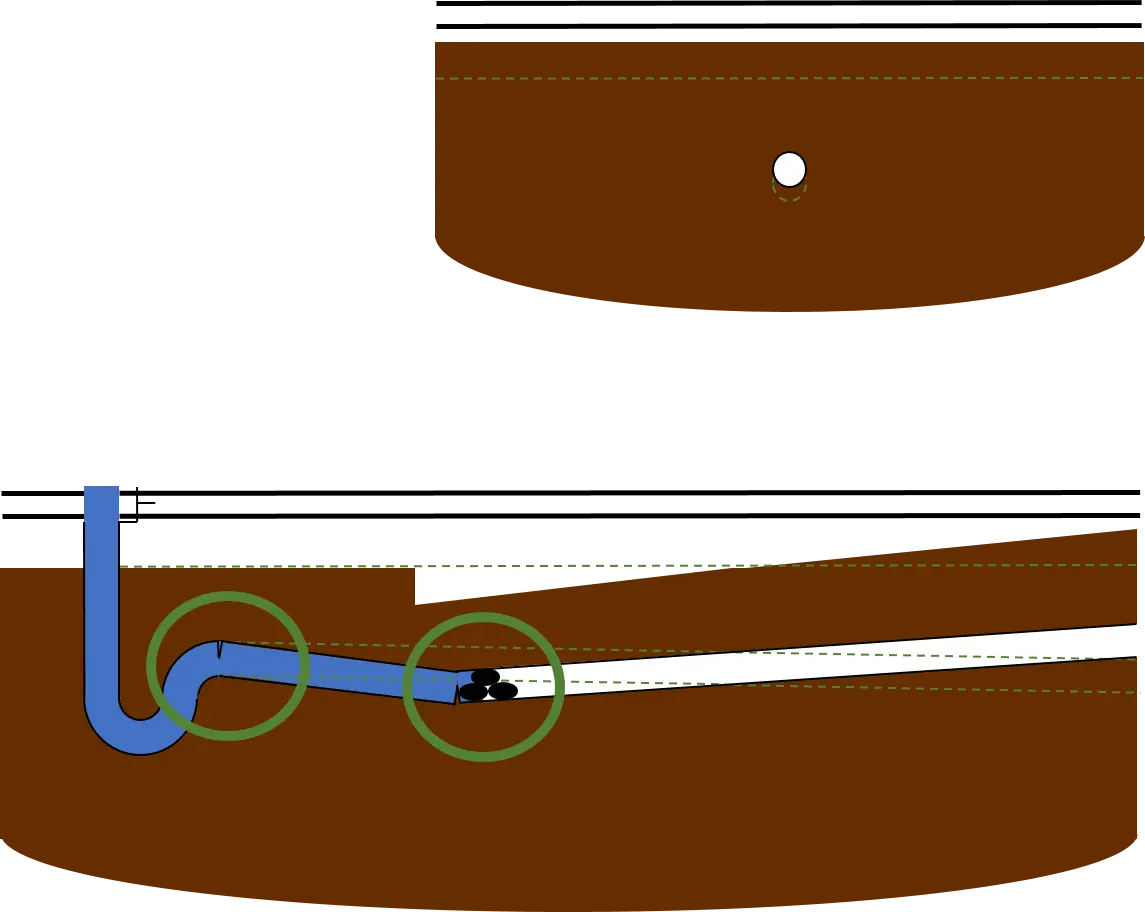
UNPROTECTED EXAMPLE
SLAB-ON-VOIDFORM WITH
NON-ISOLATED PLUMBING
Plumbing that is not designed to receive soil-induced loads can become unfunctional, crack, and become exposed to the subgrade.
Historically, local designers have understood the code to NOT require this protection.
Designers need to know if you interpret the code to require protection of plumbing from expansive soil.
INTERNATIONAL BUILDING CODE
2021 IBC Section 1610.1 Excerpt (Previous editions are similar)
“Foundation walls and retaining walls shall be designed to resist lateral soil loads from adjacent soil. Soil loads specified in Table 1610.1 shall be used as the minimum design lateral soil loads unless determined otherwise by a geotechnical investigation in accordance with Section 1803. Foundation walls and other walls in which horizontal movement is restricted at the top shall be designed for at-rest pressure. Retaining walls free to move and rotate at the top shall be permitted to be designed for active pressure.
Lateral pressure from surcharge loads shall be added to the lateral soil load. Lateral pressure shall be increased if expansive soils are present at the site. Foundation walls shall be designed to support the weight of the full hydrostatic pressure of undrained backfill unless a drainage system is installed in accordance with Sections 1804.2 and 1805.4.3.”
INTERNATIONAL BUILDING CODE
SLAB-ON-VOIDFORM WITH
NON-ISOLATED VOID SYSTEMS
Historically, local designers have understood the code to NOT require these systems be designed by a Structural Engineer for IBC soil loads as they would a site retaining wall.
Designers need to know if you interpret the code to require this.
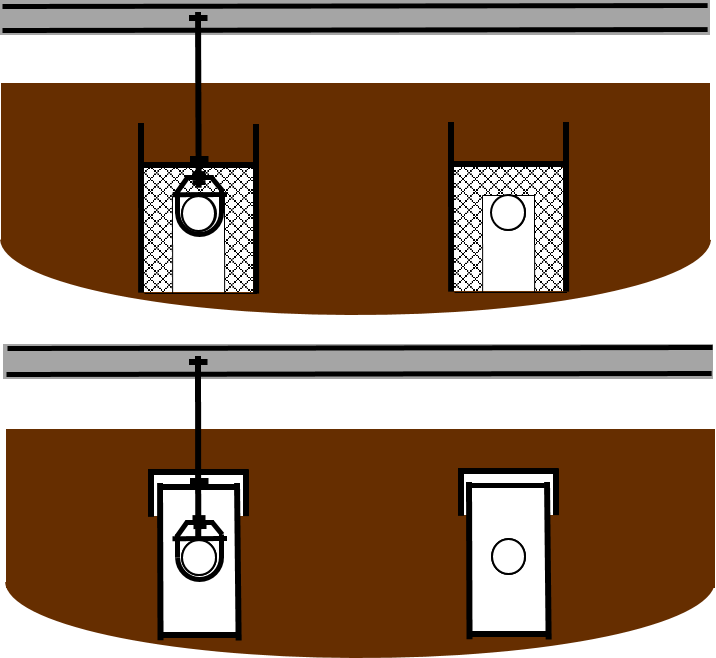
UNPROTECTED EXAMPLE
SSLAB-ON-VOIDFORM WITH
NON-ISOLATED VOID SYSTEMS
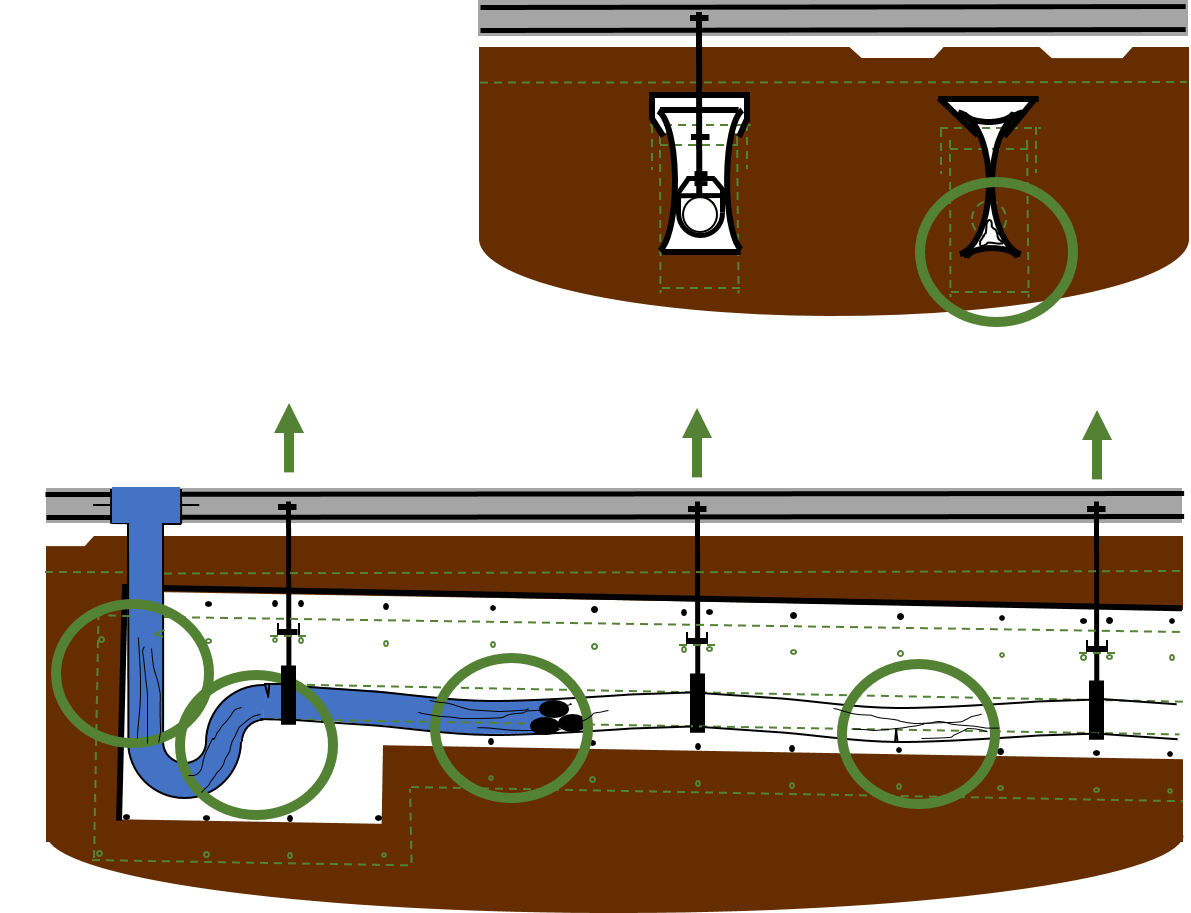
Plumbing that is not designed to receive soil-induced loads can become unfunctional, crack, and become exposed to the subgrade.
Forces on slabs can cause damage too (before rod and nut punches through soil and support washers). If rod buckles, plumbing can be damaged.
CODE HISTORY
1955 Edition ASA A40.8 National Plumbing Code
Some of the relevant “Basic Principles” in that document, indicating protection of plumbing from expansive soil is a life, safety and health issue:
Principle No. 9: The piping of the plumbing system shall be of durable material, free from defective workmanship, and so designed and constructed as to give satisfactory service for its reasonable expected life.
Principle No. 18: Where a plumbing drainage system may be subjected to backflow of sewage, suitable provision shall be made to prevent its overflow in the building.
Principle No. 19: Plumbing systems shall be maintained in a sanitary and serviceable condition.
Principle No. 22: Sewage or other waste from a plumbing system which may be deleterious to surface or subsurface waters shall not be discharged into the ground or into any waterway unless it has first been rendered innocuous through subjection to some acceptable form of treatment.
NOW COMPLETED
2024 ICC GROUP A CYCLE
2021 GROUP A HEARINGS: ITEM P8-21
This item was proposed by the Structural Engineers Association of Texas (SEAoT) with a 14-page Rationale Statement. This statement was based on a review by a collaboration of structural, mechanical and geotechnical engineers of the state of the practice, recent litigation, a publication from the Foundation Performance Association, and various products on the market.
“In these instances [referring to Non-Isolated Void Systems], the Mechanical Engineers are relying on the Manufacturer’s claims as a proprietary product and not designing a system that includes these products. However, these products retain soil as they move in response to swelling and shrinking and they impart loads onto the structure and hangers that must be accounted for.
Many design approaches which use these products in an attempt to partially isolate plumbing may actually make matters worse than if the plumbing was simply buried, even though the manufacturers claim that the product will provide a void and some Owners spend money on these products with an expectation that these products will provide a complete void.”
The item was supported by the American Institute of Architects, the Geoprofessional Business Association, the American Council of Engineering Companies – Texas, and various mechanical, geotechnical and structural engineers. The item was approved at OGV with some floor modifications.
2021 GROUP A HEARINGS: ITEM P8-21
Explicitly requires protection of plumbing from expansive soil.
Allows buried pipe under slabs-on-ground.
Requires complete isolation of plumbing under crawlspace slabs and slabs-on-voidform: “It shall not be permitted for the plumbing, hangers and supports below the slab or below the framing to be in contact with soil or any assemblage of materials that is in contact with soil within the active zone.”
Exception 1 allows buried pipe for drainage of crawlspaces
Exception 2 allows attachment to piers if the plumbing, hangers and supports are otherwise isolated.
Requires “flexible expansion joints” in the plumbing at transitions to buried conditions outside of the building. (Note: Many building officials require access be provided to flexible expansion joints.)
305.8 Expansive Soil. Where expansive soil is identified under buildings in accordance with Section 1803.5.3 of the International Building Code, but not removed in accordance with Section 1808.6.3 of the International Building Code, plumbing shall be protected in accordance with Section 305.8.1 or 305.8.2.
305.8.1 Non-Isolated Foundations. Under foundations with slabs that are structurally supported by a subgrade, it shall be permitted for plumbing to be buried.
305.8.2 Isolated Foundations. Under foundations with a slab or framing that structurally spans over an under-floor space which isolates the slab or framing from the effects of expansive soil swelling and shrinking in accordance with Section 1808.6.1 of the International Building Code, the plumbing shall be suspended so that plumbing, hangers and supports are isolated, by a voidspace, from the effects of expansive soil swelling and shrinking.
Exception: It shall be permitted for plumbing to be buried if the plumbing provides drainage of an under-floor space.
To protect the voidspace, soil shall be sloped, benched or retained in accordance with an approved design methodology.
It shall not be permitted for the plumbing, hangers and supports below the slab or below the framing to be in contact with soil or any assemblage of materials that is in contact with soil within the active zone. It shall not be permitted for a slab and plumbing to be lifted as an assembly to create the voidspace unless the under-floor space is a crawlspace with access to allow inspection of plumbing after lifting.
Exception: It shall be permitted for the piping, fittings, hangers, and supports below the slab or below the framing to
be in contact with structural elements of the foundation that are designed to resist the effects of expansive soil
swelling and shrinking in accordance with Section 1808.6.1 of the International Building Code.
Organic materials subject to decay shall not be used for hangers, supports and soil retention systems. Materials subject to corrosion shall not be used for hangers, supports and soil retention systems unless protected in an approved manner.
Where plumbing transitions to a buried condition beyond the perimeter of the foundation, an adequately flexible expansion joint shall be provided in the plumbing system to accommodate the effects of expansive soil swelling and shrinking.
RECOMMENDATIONS
RECOMMENDATIONS
Considering the IPC Committee Action and Online Government Voting in 2021 clarifying that protection of plumbing from expansive soil is a matter of health, safety and welfare:
If anyone asks you for a code interpretation of whether IPC Section 305.2 requires that plumbing under a building be protected from expansive soil, we recommend that you simply say, “Yes.”
If anyone asks you for a code interpretation of whether IBC Section 1610 requires that non-isolated void systems be designed to resist the referenced soil loads, we recommend that you simply say, “Yes.”

